Crypto Plan For Building A Seven-Figure Portfolio
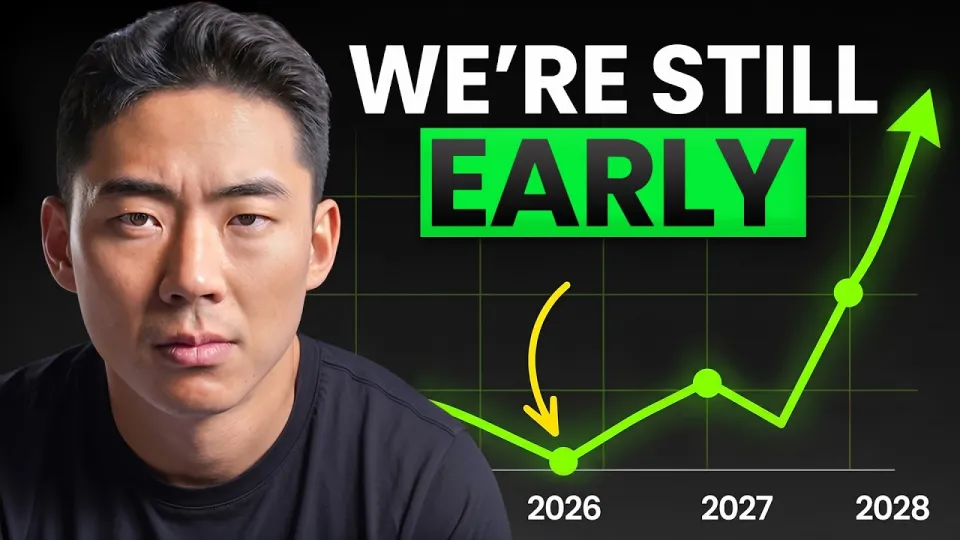
Video: my plan to make millions in crypto 2027
Need articles like this for your video? They help promote it on YouTube and Google — order them in the Telegram bot @sat_sit_bot. It writes articles around your video, embeds the video and publishes them on popular niche websites (no ads). Free trial — 50 articles.
· based on the channel Brian Jung
Crypto is a cyclical market where the plan matters more than the prediction: decide in advance what you own, how much, and at what price you take profit or cut a position. Brian Jung's breakdown of his own roadmap for the coming cycle, published on his channel, is built on exactly that logic — narratives first, allocation second, execution last. His paid research product sits behind a waitlist at Kaizen Pro, while the free market report goes out by email.
Why crypto stays a bull-case asset class
The structural argument for crypto is that demand for scarce, portable, censorship-resistant assets keeps growing while supply of the two largest ones is programmatically capped. Bitcoin's issuance schedule halves roughly every four years, and the spot ETFs launched in the United States turned an internet-native asset into something a registered investment advisor can allocate to. Ethereum's move to proof-of-stake cut new issuance and added a burn mechanism, making ETH a yield-bearing asset for stakers.
The counterargument is equally structural: crypto is still a liquidity asset. When the cost of capital rises, the marginal buyer disappears first from the riskiest end of the curve. That is why cycle timing, not conviction alone, decides outcomes — a point regular viewers raise constantly, noting that being permanently bullish is easy and being profitable is not.
The narratives that tend to drive a cycle
Narratives are where capital rotates after Bitcoin has already made its move. Three themes recur in the roadmap:
- Bitcoin as institutional collateral. Spot ETFs, corporate treasury holdings and custody infrastructure turn BTC into a balance-sheet asset. Flows into these vehicles, not retail sentiment, set the marginal price.
- Ethereum and the layer-2 economy. ETH captures fees from rollups and staking demand; the bet is that scaling increases total economic activity rather than cannibalising the base chain.
- High-throughput layer-1s. Chains such as Sui compete on execution speed and developer experience. These are higher-beta bets: bigger upside in a risk-on phase, deeper drawdowns when liquidity leaves.
A fourth, quieter narrative is regulation. Clarity on stablecoins and bank participation is infrastructure news — it widens the funnel of buyers. Treating every regulatory headline as bearish is a common retail reflex, but licensing and custody frameworks generally help the assets that survive them.
A working allocation framework
Position sizing is the part of the plan that actually determines whether a cycle is profitable. A simple structure that survives real drawdowns:
- Core (40–60%): Bitcoin and Ethereum. Liquid, institutionally accessible, easiest to value and to exit.
- Satellites (20–40%): three to seven altcoins tied to specific narratives — scaling, high-throughput chains, DeFi infrastructure. Cap any single name at a small share of the satellite bucket.
- Dry powder (10–20%): stablecoins held for drawdowns. This is the part of the plan people skip and later regret.
- Exit rules written down before entry: a ladder of profit-taking levels, plus a hard invalidation point for each thesis.
Two rules do most of the work. First, never let one position be large enough that being wrong ends the portfolio. Second, scale out on the way up rather than trying to sell a single top — cycle tops are only obvious in hindsight.
Common doubts from the audience
The most frequent objection is that the same bullish case was made a cycle earlier and did not prevent heavy losses. That is usually a sizing and timing problem, not a thesis problem: buying after a large move with leverage and no exit plan converts a good idea into a bad trade.
A second recurring question is whether bank involvement ruins crypto's original purpose. Custody and regulated access do not remove self-custody; they add a parallel on-ramp. The people most exposed to counterparty risk are the ones who never held their own keys, and that choice remains available regardless of how many institutions enter.
A third theme is timing the top. Some argue the peak lands much later than consensus expects. The honest answer is that no one knows the date, which is precisely why a laddered exit beats a single forecast. Plan for a range of outcomes, not one scenario.
Execution checklist before adding risk
Before increasing exposure, run through this list:
- Write the thesis for each asset in one sentence, including what would prove it wrong.
- Set position sizes as percentages of total portfolio, not as dollar amounts you hope to make.
- Decide profit-taking levels in advance and automate them where possible.
- Keep a stablecoin reserve sized to buy a 30–50% drawdown, not a 5% dip.
- Review the plan monthly, not hourly — frequent checking increases the odds of abandoning a sound strategy.
Useful links
- Kaizen Pro waitlist — paid research product and community.
- Free crypto market report newsletter — weekly market notes by email.
- Brian Jung on X and Instagram.
- Risks and disclaimers document.
Final take
A crypto plan is only as good as its weakest rule, and the weakest rule is almost always position sizing. Brian Jung's roadmap is useful less as a price forecast than as a template: identify the narratives attracting capital, allocate across a core and a satellite bucket, keep dry powder, and define exits before entering. Anyone can be bullish; the investors who compound through cycles are the ones who decide in advance how much they are willing to lose on being wrong. If you want the fuller version of this framework, the Kaizen Pro waitlist is where the author publishes it, and none of it is financial advice — size accordingly.
Key takeaways
- Brian Jung's plan frames crypto as a cycle game: accumulate during doubt, scale out into strength, and size positions so a single drawdown cannot end the portfolio.
- The narratives he tracks are Bitcoin as institutional collateral, Ethereum and layer-2 scaling, and high-throughput chains such as Sui.
- A workable allocation splits capital into a core Bitcoin/Ethereum base, a basket of narrative altcoins, and a cash reserve for drawdowns.
- Stablecoin regulation and bank involvement are treated as bullish infrastructure news, not as a threat to self-custody.
- The biggest documented failure mode is buying a bullish thesis at the top of a cycle and holding through the drawdown without a plan.
Questions & answers
What does Brian Jung's crypto plan actually consist of?
It is a cycle framework rather than a single trade: a structural bull case for Bitcoin and Ethereum, a list of narratives expected to attract capital, and a position-sizing plan with predefined profit-taking and invalidation levels. The emphasis is on execution rules, not price targets.
How much of a portfolio should go into altcoins?
A common structure keeps 40–60% in Bitcoin and Ethereum as a core, 20–40% in a small basket of narrative altcoins, and 10–20% in stablecoins as dry powder. Any single altcoin should be small enough that a total loss does not damage the portfolio.
Does bank and institutional involvement hurt crypto?
It adds a regulated on-ramp and more buyers without removing self-custody, so it is usually infrastructure-positive. The trade-off is counterparty risk for people who leave assets on custodial platforms instead of holding their own keys.
Why do people lose money even when they are right about crypto's direction?
Because they buy after a large move, use leverage, and hold through a drawdown without an exit plan. Timing and sizing, not the thesis, usually decide the result — which is why laddered profit-taking and a written invalidation point matter more than a forecast.
Source: my plan to make millions in crypto 2027 · Markdown version